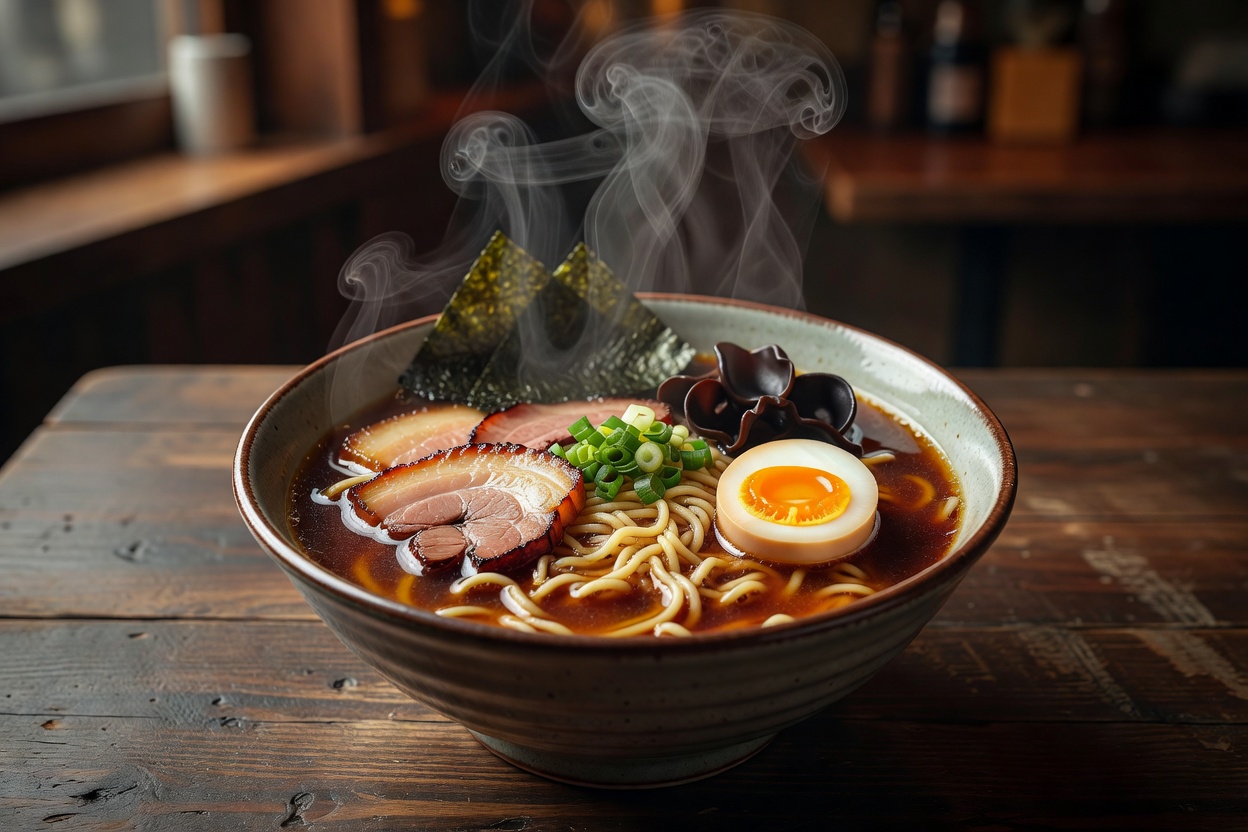
Ramen is a noodle soup with a remarkable range of textures and flavors. A typical bowl combines broth, tare (a concentrated seasoning), noodles, aroma oil, and toppings. The details vary by shop; understanding the components helps explain why two bowls with similar names can taste quite different.
The parts of a bowl
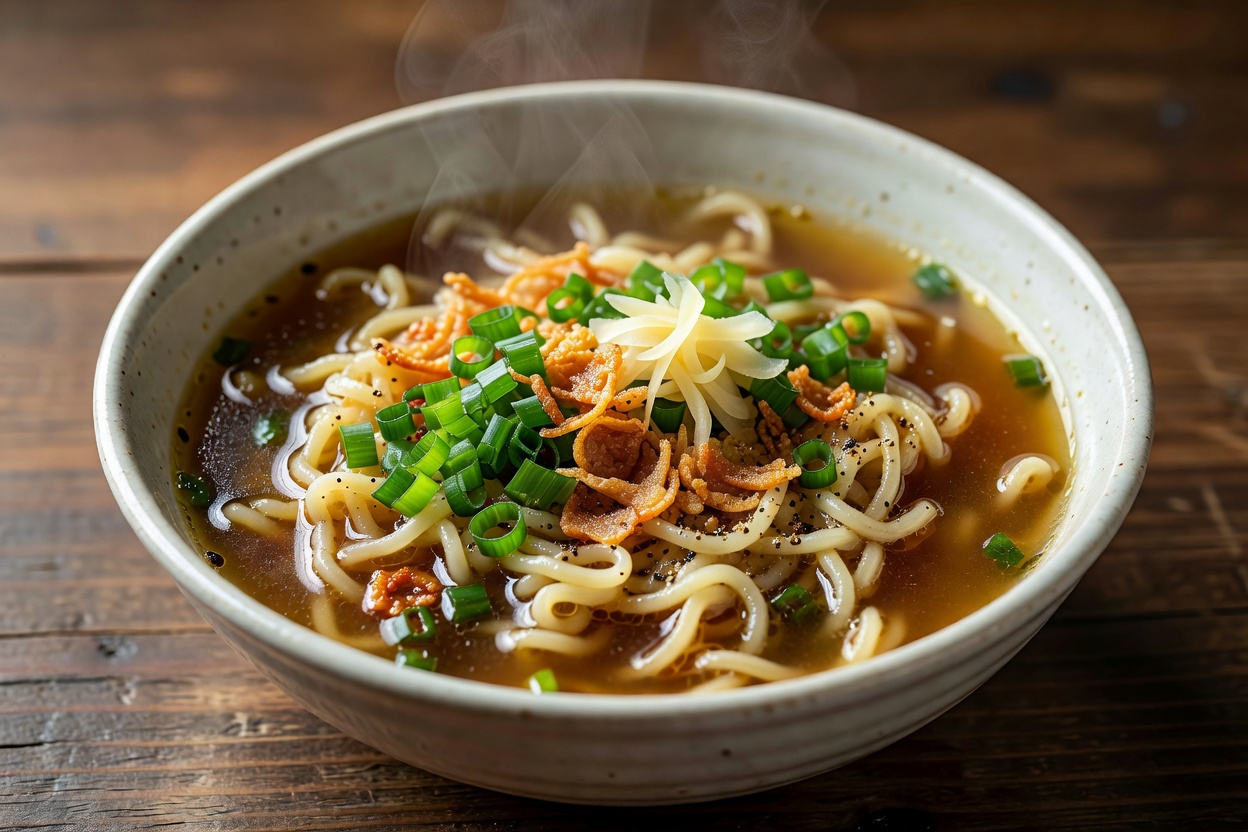
Broth supplies body and depth. Tare, added to the bowl or pot, gives the soup its central seasoning. Aroma oil carries fragrance across the surface: it may be made with rendered animal fat, scallion, garlic, or other ingredients. Noodles contribute their own character, from thin and firm to thicker and springier. Toppings might include sliced pork, egg, green onion, bamboo shoots, seaweed, or vegetables.
These parts are adjusted in relation to one another. A concentrated broth can be balanced by a particular noodle; a lighter soup may rely on a precise seasoning and aromatic oil. No single formula describes every ramen shop.
Broth names and flavor
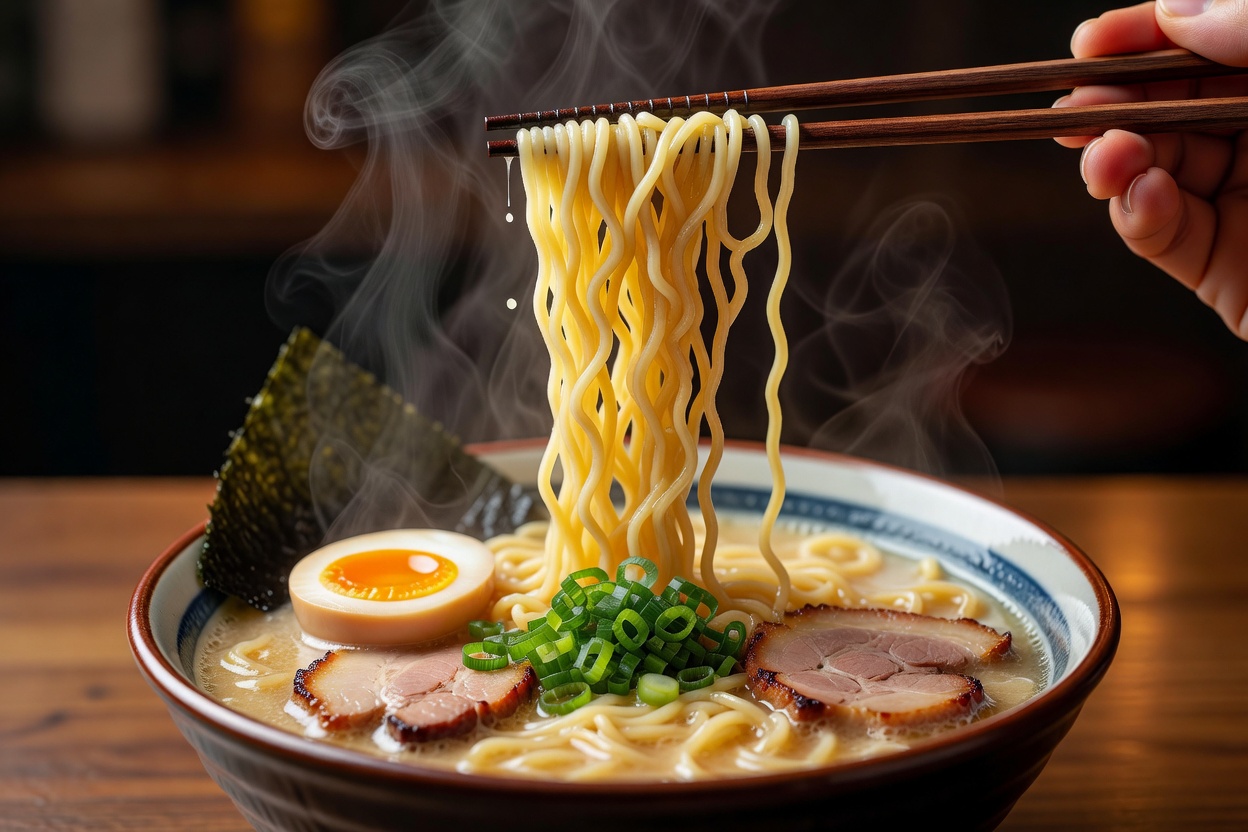
Shoyu means soy-sauce seasoning; shoyu ramen often has a savory, clear-to-medium-bodied profile, though the broth itself can vary. Shio means salt and often describes a lighter, clean-tasting seasoning style. Miso ramen uses fermented soybean paste for a rounded, savory character and may have a richer body. Tonkotsu refers to pork-bone broth, commonly simmered until it becomes opaque and creamy. Each label signals a direction, not a guarantee of identical flavor or ingredients.
Broth styles can overlap. A bowl may combine a broth base with a different tare, and shops may blend stocks or add regional touches. The useful question is not which style is best, but what balance suits your appetite: a more delicate soup, a deep fermented savor, or a substantial, creamy broth.
Regional associations, with room for variation
Sapporo is closely associated with miso ramen, often served in a hearty style suited to a cold climate. Fukuoka is associated with Hakata-style tonkotsu ramen, known for a pork-bone broth and relatively thin noodles. These are strong regional references, but they do not define every bowl in either city. Ramen travels, shops adapt, and diners bring new preferences with them. Tokyo offers many styles, while other cities and towns have their own combinations and histories.
Regional names are a useful introduction rather than a boundary. Ask what a shop emphasizes, and read the menu descriptions for ingredients and preparation.
Noodles and custom choices
Ramen noodles are commonly made with wheat and may vary in thickness, shape, and firmness. Some shops ask how firm you would like them; others set the texture themselves. A preference such as firmer noodles can be useful, but it is entirely fine to accept the standard preparation. Noodle texture changes as it sits in hot broth, so many diners begin soon after the bowl arrives.
Customization options differ. Some places allow changes to noodle firmness, oil, or seasoning, while others present a fixed recipe. A ticket machine may be used at some shops: guests select a dish and options before taking a ticket to the counter. Not every restaurant uses one, and staff can often help if instructions are unclear.
The ramen-house experience
Many ramen houses have counters facing an open kitchen. Seating can be compact, service focused, and the meal relatively quick, though restaurants vary widely in scale and atmosphere. Some have tables for groups; others are best suited to solo diners. Follow posted instructions, queue where indicated, and return a ticket or order slip if that is part of the system. A brief meal is not a sign that guests must rush; it simply reflects a format centered on a hot bowl served at its best.
Slurping noodles is common in Japan and can help cool them, but it is not a compulsory etiquette test. Eat in the way that is comfortable and considerate in the room. Be mindful of shared condiments and the space around a compact counter.
Dietary needs and trade-offs
Ramen can contain wheat, soy, sesame, egg, fish, pork, or other allergens. Broth that looks vegetable-based may still include animal stock, and toppings or seasonings can add ingredients not obvious from the name. Vegetarian or vegan bowls are available at some restaurants, but availability and cross-contact practices differ. Ask specific questions before ordering; if staff cannot confirm ingredients, choose a safer option.
A rich bowl can feel satisfying and layered, while a lighter broth may be easier to enjoy slowly. Customization gives some control, but a shop’s signature balance may not be adjustable. Ramen is best approached as a set of varied craft traditions rather than a single standard. For a different kind of focused meal, read the sushi and sashimi guide; for relaxed shared dining, continue to izakaya dining.