Sushi may be a quick lunch from a counter, a takeaway assortment, or a paced meal prepared in front of a small group. Across those settings, the common thread is rice seasoned with vinegar, salt, and often a little sugar. Sashimi, by contrast, is typically sliced seafood—or another suitable ingredient—served without sushi rice.
Rice comes first
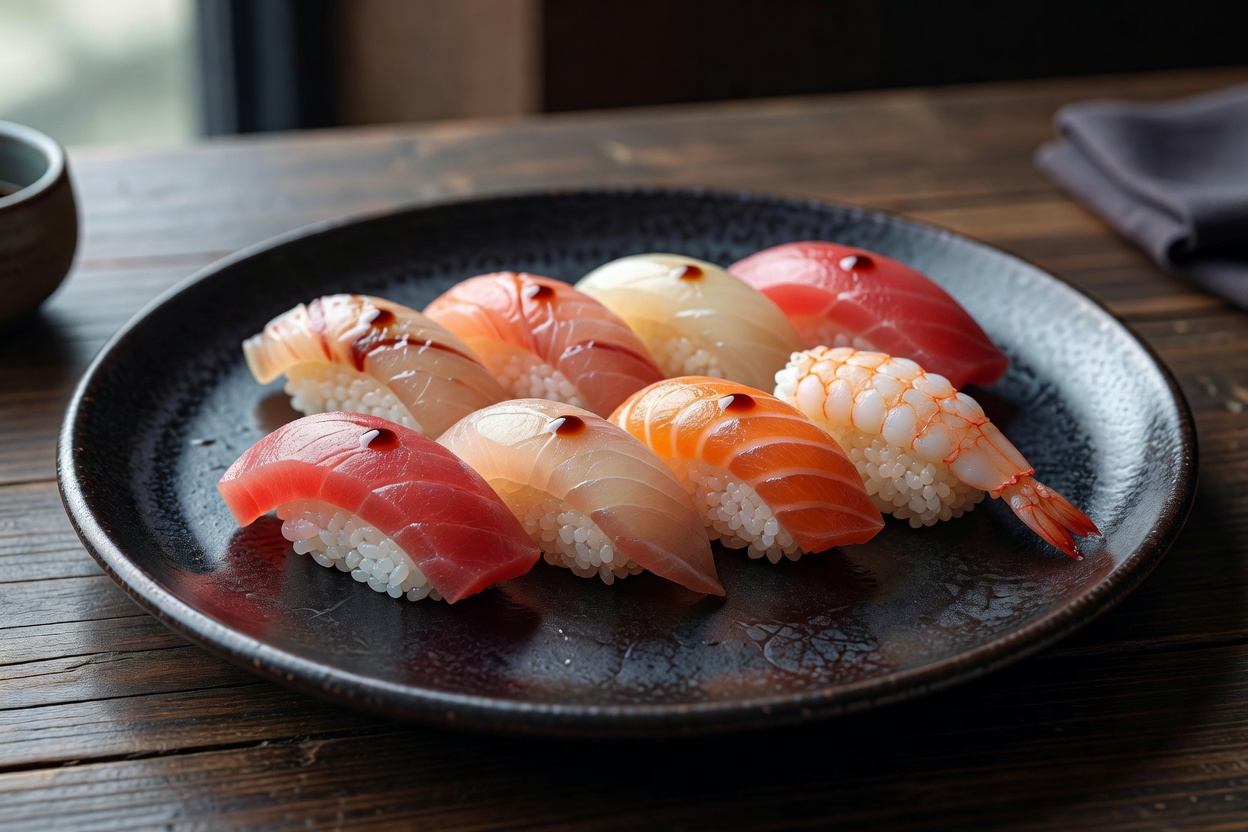
In sushi, rice is not just a base. Its seasoning, temperature, texture, and handling shape the balance of each bite. A piece of nigiri (a hand-formed mound of rice topped with an ingredient) depends on the relationship between rice and topping. The topping might be seafood, cooked eel, egg, or a vegetable preparation. Raw fish is common, but it is not a requirement for sushi.
Sashimi puts the ingredient itself in focus. Cuts, thickness, temperature, and accompaniments vary with the fish and the restaurant. It is often presented simply, but simple presentation does not mean every seafood item is interchangeable. Sourcing, handling, and preparation matter.
Common formats at a glance
| Format | What it is | What to expect |
|---|---|---|
| Nigiri | Hand-shaped seasoned rice with a topping. | A compact bite, sometimes finished with a brush of seasoning. |
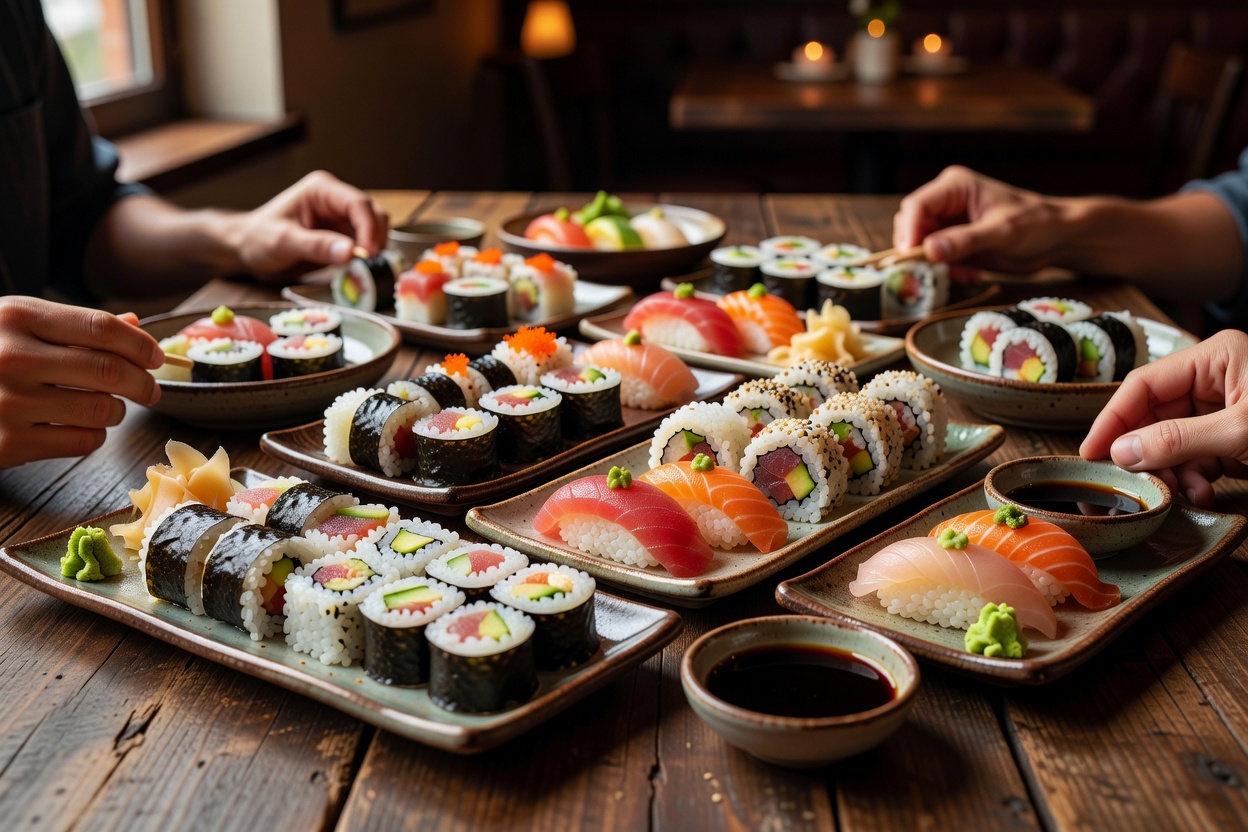
| Maki | Rice and fillings rolled, commonly wrapped in seaweed and sliced. | Many combinations, from seafood to vegetables and cooked ingredients. |
| Temaki | A hand-rolled cone of seaweed, rice, and fillings. | Often eaten soon after serving so the wrapper stays crisp. |
| Chirashi | Seasoned rice topped with a selection of ingredients. | A bowl-style presentation whose ingredients vary by kitchen. |
Ingredients, seasonality, and place
Menus can include fish and shellfish, but also cucumber, avocado, pickled vegetables, mushrooms, tofu, and sweet or savory egg. Availability changes with season, supply, and local preference. A restaurant near a particular fishery may highlight ingredients that a city restaurant sources differently; a casual shop and a specialist counter may make entirely different choices. Regional influence is real, but no ingredient belongs exclusively to one city, and menus continue to change.
Seasonal selection is not a promise that every item will be local or newly caught. It is a way of responding to ingredient quality and the kitchen’s choices. Ask what is especially good that day if you are curious, and mention allergies before ordering.
From casual meal to counter experience
A casual sushi restaurant may offer set assortments, individual plates, or a broad menu. Conveyor-belt formats, takeaway counters, and neighborhood shops make sushi accessible in different ways. At a specialist counter, the chef may prepare each serving in sequence and the pace can feel more conversational. Some counters offer a chef-selected course; others allow direct ordering. Neither setting represents every sushi restaurant.
At a counter, let the restaurant’s service style guide you. A piece may be intended to eat as served, while condiments remain available if desired. If you want to know whether a piece has already been seasoned, ask. Chopsticks are common, and many diners also eat nigiri with clean fingers; follow your comfort and the establishment’s cues. Use only a little soy sauce when it is offered, and avoid letting it overpower the rice. These are practical suggestions, not universal rules.
First visit: useful considerations
If you are new to sushi, start with a mix of familiar cooked and vegetable options alongside something you would like to try. Ask staff to explain unfamiliar names or recommend a suitable assortment. Be clear about allergies, pregnancy-related food guidance, or other dietary needs; kitchens may not be able to accommodate every request, and cross-contact can matter. Raw or undercooked seafood carries food-safety considerations. Choose a reputable establishment and follow current health guidance relevant to your circumstances.
Some guests prefer counter dining for its direct view of preparation; others appreciate the privacy and flexibility of a table. A specialist meal can be more paced and ingredient-led, while a casual meal may be quicker and more customizable. Neither is the single correct way to enjoy sushi. Attention to rice, the character of each topping, and the restaurant’s own rhythm is a good place to begin.
Keep exploring
To compare another ingredient-led bowl, continue to ramen houses and noodle traditions. For chef-led tasting sequences and changing menus, visit omakase and seasonal cuisine.